The idea of a night under the stars sounds romantic, but the reality of unprepared camping in the wild tends to be less pleasant. Hypothermia, dehydration, a soaked sleeping bag, or a stove that won't work can turn a nice weekend into discomfort you'll remember for all the wrong reasons. Most problems don't actually start out in the field, but at home already - through a poor choice of gear, or simply forgetting it altogether.
This guide will help you put together your camping gear systematically. It's not a list of products from the e-shop, but an explanation of the principles behind each category of gear. Once you understand why a given item works, you'll be able to judge for yourself whether you actually need it.
Tent and sleeping: the foundation that determines the quality of your whole stay
A tent isn't just a roof over your head. It's your first line of defence against rain, wind, insects, and above all against losing body heat. The human body lowers its metabolism by roughly 10-15% during sleep, meaning significantly lower heat production. Combined with a cold surface under the tent and any draught, the temperature in your sleeping bag can drop enough that you keep waking up, and your sleep loses its restorative function.
Choosing a tent
For a beginner heading to a classic campsite or a festival, a double-layer dome tent (the so-called igloo) is the optimal choice. Two layers - a breathable inner tent and a waterproof outer flysheet - together solve two conflicting requirements: letting water vapour escape from inside (so you don't wake up in a damp sleeping bag from condensation) while keeping rain out from the outside. Single-layer tents tend to be cheaper, but condensation inside them tends to be a serious problem.
Look at the flysheet's hydrostatic head - at least 3,000 mm for typical Czech conditions. For comparison: light rain represents a pressure of about 1,000 mm, while heavier rain with wind easily exceeds 2,000 mm. For the groundsheet, which your body weight presses on, it's better to count on a minimum hydrostatic head of 5,000 mm.
Choose a tent size one size larger than you think you need. A tent labelled as a two-person tent will let two of you sleep in it, but there won't be room left for backpacks and boots. And you don't want to leave those outside overnight because of rain and dew. A vestibule (apse) partly solves this problem, but even so, the usable space inside a tent tends to be 20-30% smaller than you expect.
Sleeping bag and sleeping mat
Don't skimp on your sleeping bag and sleeping mat. They're the two most important items in your entire kit. A sleeping bag works on the principle of trapping a pocket of air around your body, which your body heat then warms. But if you're lying directly on cold ground, conduction (heat transfer through contact) draws energy away from you up to 25× faster than cold air. That's why a sleeping mat is at least as important as the sleeping bag.
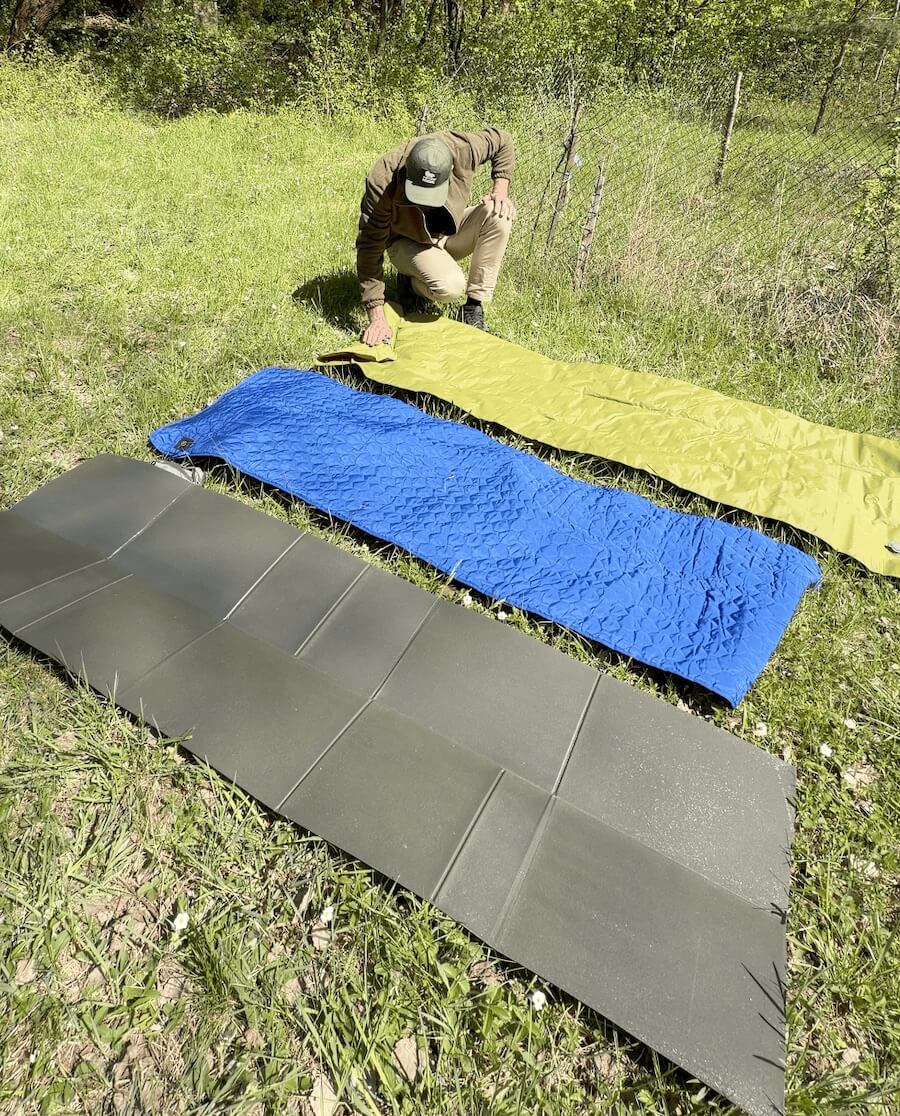
With a sleeping bag, pay attention above all to the comfort rating, not the extreme figure. The comfort temperature indicates the conditions under which you'll sleep comfortably in the bag. The extreme value is the survival limit, not comfort. For summer camping in the Czech Republic, plan for a comfort rating around 5-10 °C, since nighttime temperatures in the Czech mountains commonly drop below 10 °C even in July.
For a sleeping mat, pay attention to the R-value, which indicates thermal resistance. For three-season use in the Czech Republic, a value around R 2.0-3.5 is enough. Foam mats are durable and cheap, but less comfortable. Self-inflating or inflatable versions offer better insulation and comfort, but are more prone to punctures. That's why it's a good idea to carry a repair kit.


Clothing: layering as a system, not a fashion choice
When people get ready to go camping, they usually think about the tent and sleeping bag. Clothing gets handled by mood - they pack a T-shirt and a hoodie and hope it'll be enough. But the temperature range over a single day in the Czech wild easily reaches 15-20 °C. You might have 8 °C in the morning and over 25 °C in the sun by afternoon. One outfit isn't enough for that.
The principle of proper outdoor clothing rests on a three-layer system, which lets you respond flexibly to changing conditions.
First layer: moisture management
Functional base layers worn directly on the skin are the foundation. Cotton is your enemy when camping, because it absorbs moisture and holds it against the body. Wet cotton also draws heat away up to 25× faster than dry material. Synthetic materials (polyester, polyamide) or merino wool, on the other hand, move sweat away from the skin toward the outer layer, keeping you dry.
Second layer: insulation
A fleece hoodie or light natural insulation (e.g. a thin down jacket) traps a layer of air that acts as a thermal shield. What matters is that this layer stays breathable. Fleece with a weight around 200 g/m² is the most versatile choice for Czech summers.
Third layer: protection from the elements
A waterproof, windproof jacket is insurance for when the weather turns bad. Look for jackets with a hydrostatic head of at least 10,000 mm and breathability of at least 5,000 g/m²/24h. Cheaper raincoats will keep the rain out, but won't let moisture escape from the inside either, so you'll end up sweating during any activity.
For your feet, plan on two pairs of socks per day (a dry pair in the morning, a spare in the evening) and at least one extra pair as a reserve. Wet socks, combined with wet footwear, are the fastest route to blisters and chafing. When choosing footwear, go for higher hiking boots with a sole that stabilises your ankle on uneven terrain. Ideally, wear them for a few days before your trip to avoid pressure sores.
Backpacks and carrying gear: spreading the load means saving your back
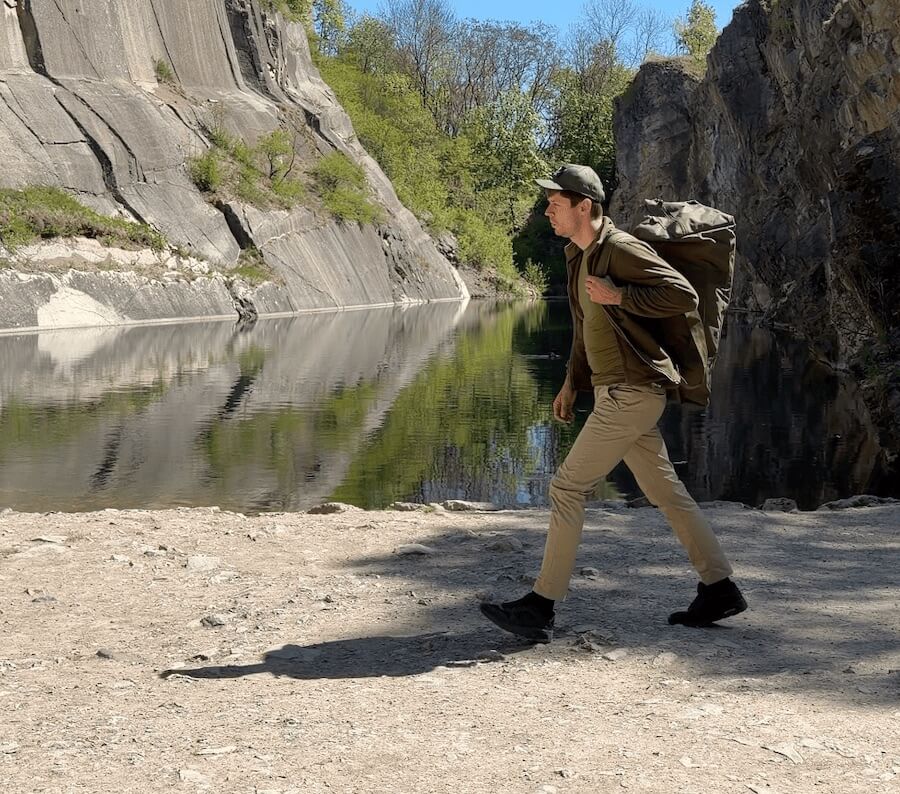
The way you carry your gear directly affects your endurance and comfort. A poorly adjusted or overloaded backpack causes back and shoulder pain typically after just two hours of walking. The reason is simple: if the load's centre of mass doesn't sit at the level of your shoulder blades, your body keeps compensating for the imbalance and overloads your muscles.
For car camping, a larger sports bag or a suitcase plus a smaller daypack for trips from the campsite is enough. But if you're planning to travel on foot, you need a hiking backpack with a capacity of 50-70 litres and a chest strap and hip belt. The hip belt is key, since it transfers up to 60-70% of the weight from your shoulders to your hips, which the body handles far better.
The packing rule is simple: the heaviest items (tent, food, water) belong close to your back at the centre, light items (sleeping bag, clothing) go at the bottom and top. Items you need quickly (raincoat, water bottle, flashlight) go in side pockets or on top. The total weight of a loaded backpack shouldn't exceed 20-25% of your body weight.
It's also worth investing in a waterproof cover or a backpack rain cover. Even quality backpacks start letting moisture through the seams after prolonged rain. Drying out soaked clothing and a sleeping bag in the field takes a lot of time and energy, and in bad weather is often simply impossible.
Cooking in the field and hydration: fuel for body and mood
During physical activity in the fresh air you burn significantly more energy than at home. A typically active person needs roughly 2,500-3,500 kcal a day while camping, depending on how demanding the activities are. A hot meal isn't a luxury, but a necessity, especially on colder days. Heating your food saves the energy the body would otherwise have to spend warming cold food up to body temperature.
Choosing a stove
For a beginner, the most reliable choice is a gas stove that screws onto a canister. You can adjust the flame instantly, lighting it is simple, and the risk of burns is lower than with a liquid-fuel or solid-fuel stove. One 230 g canister typically lasts 60-90 minutes of cooking, which corresponds to roughly 8-12 rounds of heating water for tea or an instant meal. So for a weekend trip for two, one canister is enough.
Along with the stove you need a lightweight pot with a lid (a lid speeds up cooking and saves up to 30% of your fuel) and a stable base. Some manufacturers offer compact sets where the stove, pot, mug, and cutlery nest inside each other. Round out your entire camp kitchen with a pocket knife, a bottle opener, and a fireproof mat under the stove.
Hydration
Insufficient hydration impairs cognitive function, coordination, and thermoregulation. Even a 2% loss of body weight from water loss measurably reduces the body's performance. Plan for at least 2-3 litres of water per person per day, up to 4 litres with increased physical activity and in hot weather.
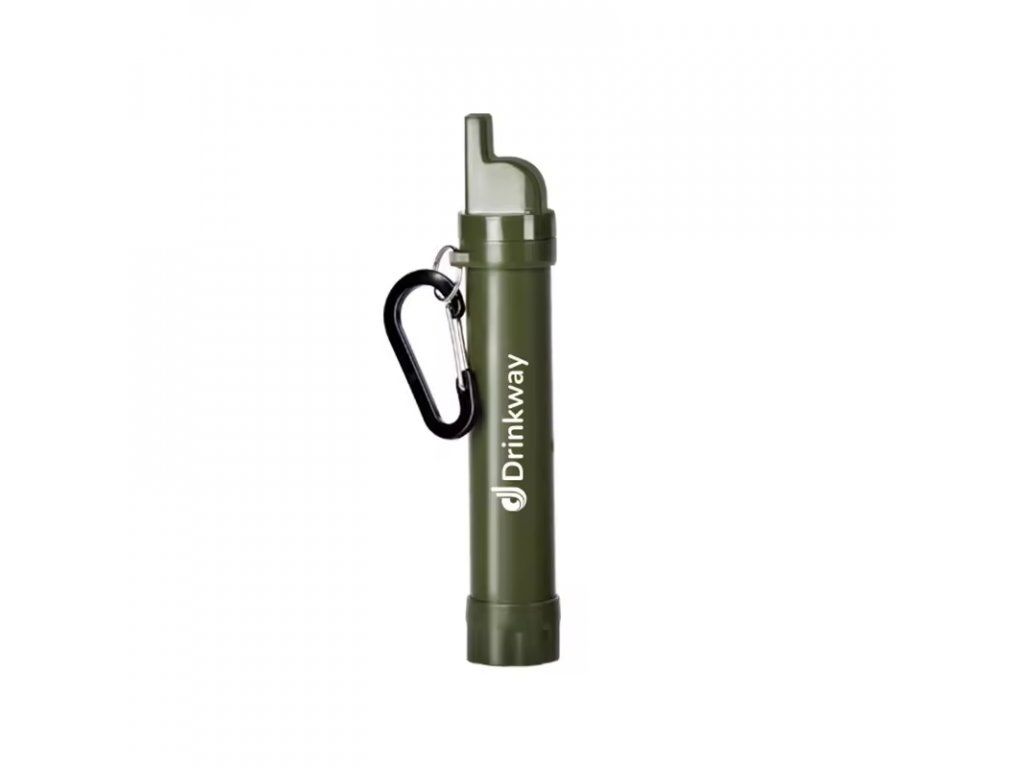
Carry at least one 1-litre canteen and one collapsible water container (5-10 l) as a reserve at the campsite. If you're planning to draw water from natural sources, also pack a purification tablet or a compact filter. Water from streams and rivers can contain bacteria and protozoa (typically giardia), which cause serious digestive problems.


Hygiene at the campsite: what you really need and what you don't
Hygiene in the outdoors isn't just about comfort, but above all about prevention. Dirty hands are the most common source of foodborne illness in the outdoor environment. All it takes is contact with contaminated water or soil followed by touching food.
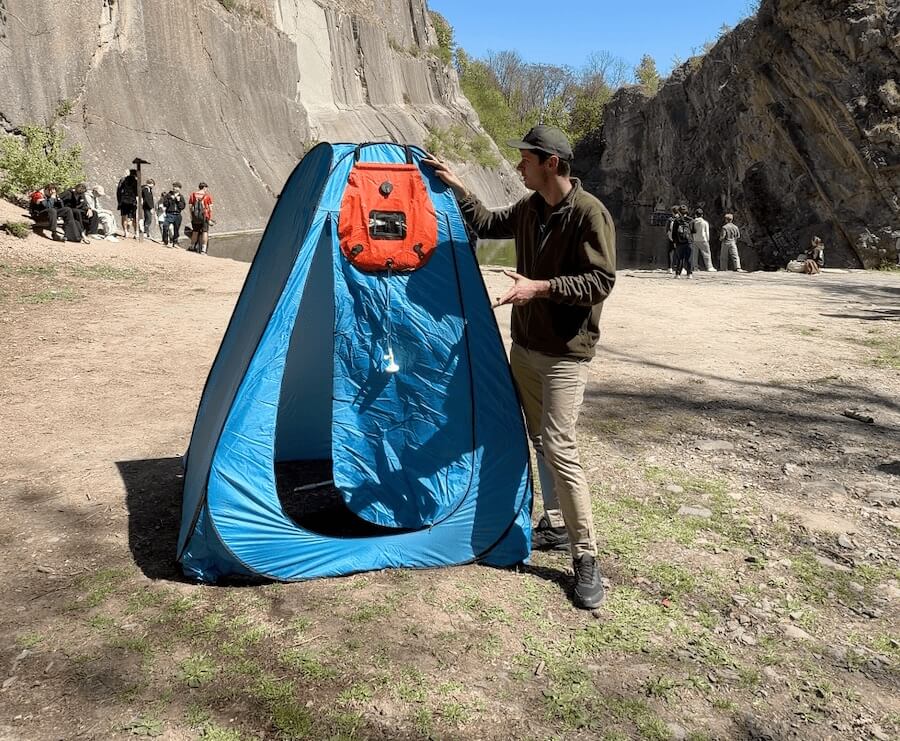
Basic hygiene gear includes biodegradable soap (regular soaps and shampoos contain substances that pollute water sources), hand sanitiser gel, a small microfibre towel (dries up to 5× faster than cotton), a toothbrush and toothpaste, toilet paper in a plastic bag, and rubbish bags.
Protection against sun and insects is also important. SPF 30+ sunscreen and a repellent against ticks and mosquitoes always belong in your kit. In the Czech Republic, the risk of tick-borne encephalitis and Lyme disease is a reality, not a rare exception, especially from May to October. A repellent with the active ingredient DEET (20-30% concentration) or icaridin typically offers protection for 4-8 hours.
If the campsite has no showers, you can manage with wet wipes and water from a bottle. For personal hygiene, special "wash-all-in-one" outdoor shampoos also exist, which you can use to wash your body, hair, and dishes.

Power and lighting: how to stay connected even off the grid
Light and electrical power are easy to overlook while camping, but as soon as the sun sets, it only takes a few minutes in complete darkness to understand how important a flashlight is. Czech summers offer relatively long days, but even so, nights from June to August are 7-9 hours long. At the edges of the season, in May and September, they're even longer.
Lighting
A head torch (headlamp) is the most useful item of gear for nighttime. Unlike a classic flashlight, it leaves both your hands free, which is key when cooking, pitching a tent, or walking over uneven terrain. Look for a model with at least 200 lumens and a red-light mode, which doesn't dazzle you at night and doesn't disrupt your night vision.
As supplementary lighting for the campsite, a compact LED lamp or a USB-powered light chain works well. Classic candles and oil lamps do create atmosphere, but represent a fire risk that has no place inside a tent.
Charging devices
Your phone serves as navigation, a weather forecast, and an emergency contact while camping. In the field, though, it uses more power because it's searching for a weaker signal, so the battery may last 30-50% less time than in the city. A power bank with a capacity of at least 10,000 mAh is therefore essential. For longer stays, consider a solar panel, which on a clear summer day can recharge a phone in roughly 3-5 hours.
First aid kit and gear for emergencies
No one plans for something to go wrong. But nature doesn't care about your plans. A cut while chopping food, a twisted ankle on a slippery slope, a reaction to an insect sting - these are situations that happen routinely, and even a layperson can handle them if the right supplies are at hand.
A basic camping first aid kit should include: sterile bandages and plasters of various sizes, disinfectant (e.g. Betadine), an elastic bandage for a compression dressing, tweezers (for splinters and ticks), an antihistamine for allergic reactions, anti-diarrhoea medication, and ibuprofen or paracetamol. Add any personal medication you take as well.
Beyond the first aid kit itself, plan on a few other items that can help you significantly in a critical moment:
An emergency thermal blanket (space blanket) weighs under 50 g and fits in a pocket, but can reflect back up to 90% of body heat. In hypothermia, shock, or a forced bivouac, it can be decisive.
A whistle is a simple but effective signalling tool. A human voice in open country is typically audible at a distance of 100-200 metres, while the sharp sound of a whistle carries 500 metres or more.
A multifunction knife or multitool comes in handy for preparing food, minor gear repairs, and non-standard situations. Models with a screwdriver, saw, and bottle opener are especially useful.
Also include waterproof matches or a fire steel, sturdy paracord (at least 5 metres), plastic bags to separate wet and dry laundry, and duct tape wound around a pencil (no need to carry a whole roll). Duct tape is remarkably versatile - you can patch a hole in a tent, secure a broken pole, or fix a torn backpack strap. You'll find all your survival gear in one place.

What beginners underestimate most often
Overpacking is among the most common mistakes. Beginners tend to pack "just in case" everything they can find at home. The result is a backpack that weighs 20 kilograms and contains things you'll never use. The opposite mistake is underestimating nighttime temperatures. Czech summers are pleasant during the day, but nights can be surprisingly cold - and without a warm sleeping bag and functional base layers you'll wake up cold and unrested.
Another commonly neglected area is testing your gear before you leave. Set the tent up at home in the garden or a park. Make sure you know the pole and staking system. Try heating water on the stove. Check that all the zippers on your sleeping bag work. Discovering broken gear out in the field, in the dark and rain, is incomparably worse than spending half an hour preparing at home.
And finally: the weather doesn't respect the forecast. Treat every forecast as an estimate, not a guarantee. Always plan for the possibility that it'll be a few degrees colder and rainy. This philosophy will save you more than one unwelcome surprise.
Summary: what to take away from this guide
Well-prepared camping stands on a few essential pillars. Start with a quality double-layer tent with a hydrostatic head of at least 3,000 mm, and invest in a sleeping bag with a comfort rating suited to Czech nights (5-10 °C) and a sleeping mat with an R-value of at least 2.0. Build your clothing on the three-layer principle and avoid cotton. Choose a backpack with a hip belt and don't exceed 20-25% of your body weight. A gas stove with screw-on canisters has proven itself for cooking, and for hydration plan on at least 2-3 litres of water per person per day. Don't forget hygiene, protection against sun and insects, a head torch for the night, and a power bank for charging your electronics. Treat the first aid kit and emergency blanket as mandatory gear, not an extra. And above all: test everything before you leave. The best time to solve problems is at home, not in the rain in a meadow.