
The worst moment during survival in the wild doesn't come when you run out of food. It comes when you discover that the gear you were relying on either doesn't work, or you simply don't have it. Soaked matches, a dead flashlight, a knife that won't take an edge, or a sleeping bag with a 0 °C comfort rating bought for a July trip to the Krkonoše Mountains. These things don't fail by chance. They fail because nobody tested them beforehand and understood why they work the way they do.
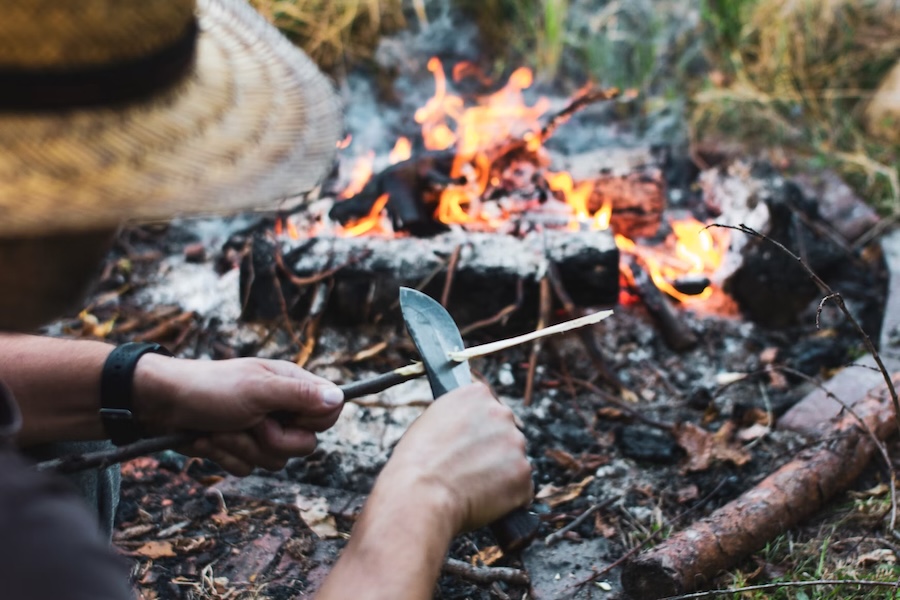
Photo: Maciej Karoń | Source: unsplash.com
This guide will help you put together survival gear systematically. It's not a promotional list of products, but an explanation of the priorities and principles that survival in the wild is built on. If you understand why a given item works, you'll be able to improvise even if you're missing the right one in a critical moment.
The rule of three: the foundation everything else builds on
Before you start putting your gear together, you need to understand one key rule. The human body survives roughly 3 minutes without air or with severe bleeding, 3 hours with uncontrolled loss of body heat, 3 days without water, and 3 weeks without food. This order of priorities is called the Rule of Three, and it's the foundation of every rational survival strategy.
Food, which beginners treat as the first thing to solve, is nearly irrelevant in short-term survival. By contrast, body heat and water are priorities that determine survival within a matter of hours. Gear for regulating body temperature and securing drinking water has to be reliable at all times - in dry weather, in the rain, on a freezing night, and in summer heat.
This rule is exactly what the whole logic of assembling your gear is built on. The most expensive or heaviest items aren't necessarily the most important. What matters most are the items that address your most urgent needs first.
Body heat: shelter and emergency insulation
Hypothermia doesn't start below freezing. In practice, an air temperature of around 10 °C, combined with humidity and wind, is enough to bring you to the early stage of hypothermia within 2 to 3 hours without movement and dry clothing. A body temperature of 35 °C causes impaired coordination and judgment; at 32 °C shivering stops and the body enters a dangerous shutdown. That's exactly why shelter and insulation from the surrounding environment is the first thing you should think about.
Emergency thermal blanket and bivy bag
The basic building block of every survival kit weighs less than 50 grams. An emergency thermal blanket (space blanket) reflects back up to 90% of radiated body heat. In an emergency you wrap it around your body with the reflective side facing in, creating an improvised thermal barrier. The downside of the thin foil is condensation, since moisture builds up inside it.
A better alternative for longer-term survival is a bivy bag, an emergency sleeping bag made of laminated foil or lightweight waterproof material. Compared to a flat blanket, a bivy bag holds its shape better, reduces heat loss from ground contact, and combined with layered clothing can provide an acceptable night without a sleeping bag at temperatures above 0 °C. Ground-level temperature is always lower than air temperature measured in the shade at a height of 1.5 metres, and a difference of 5 to 10 °C is not unusual.
Tarp and natural shelter
If you have the time and gear to build a more solid shelter, a tarp (a waterproof sheet) is the most versatile option. Unlike a tent, it doesn't offer protection on all sides, but it weighs a fraction as much, can be pitched in dozens of ways depending on terrain and wind conditions, and when hung correctly it will keep you dry even in heavy rain. To pitch a tarp you need paracord, a cord with a 250 kg breaking strength that, at 4 mm diameter, weighs less than 50 grams per metre. Ten metres of paracord in your pocket solves not just shelter, but dozens of other situations too, from splinting a fracture to pulling out stuck gear.
When choosing a spot for shelter, a few basic rules apply: avoid slopes above scree fields, hollows where water flows when it rains, trees with dead branches above you, and natural corridors where wind gets funnelled. The ideal spot is a slightly raised, level area near a natural windbreak, with water draining naturally away from it.

Fire: more than warmth
Fire solves several survival problems at once: it maintains body temperature, allows you to purify water by boiling, cooks food, serves for signalling, and psychologically stabilises the situation. Yet the ability to reliably start a fire is one of the most underrated skills.
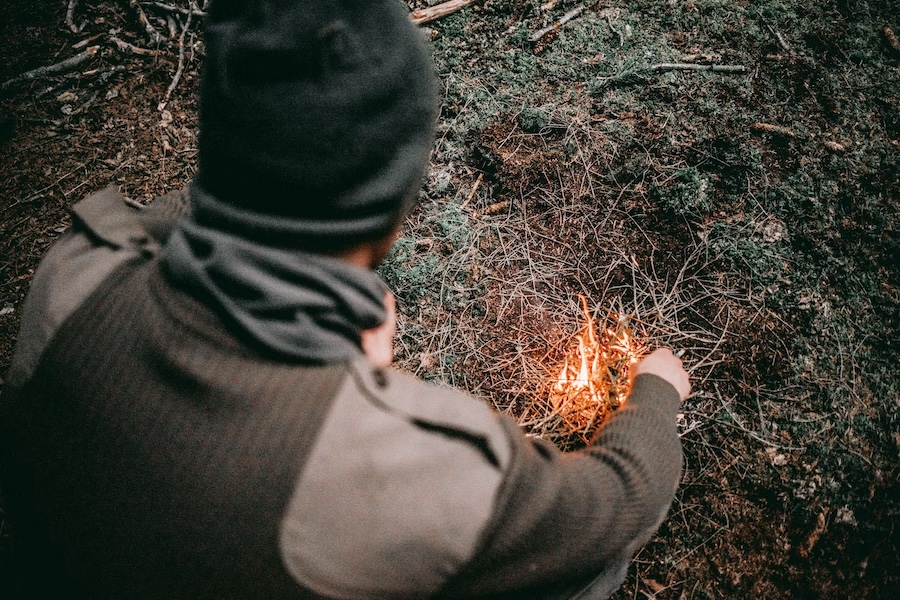
Photo: Sebastian Pociecha | Source: unsplash.com
Why matches and a lighter aren't enough
Ordinary matches get wet and stop working. A gas lighter fails at low temperatures: below -5 °C the gas pressure in the canister drops so much that the flame either doesn't ignite or is so weak it only lights thin paper. Matches specifically designed for wet conditions (stormproof matches) and a waterproof match case partly solve the problem, but they're still a consumable with a limited number of uses.
A reliable alternative is ferrocerium, a metal rod made from an iron-cerium alloy that, when scraped with a steel edge, generates sparks over 3,000 °C. Ferrocerium doesn't react to moisture, works in freezing conditions, when submerged in water, and even after years of not being used. Its only requirement is good tinder, a flammable material that catches the spark and turns it into a flame. Dry birch bark, a cotton ball with petroleum jelly, or commercial tinder (a solid hexamine block, fire paste) are reliable options. Natural tinder (dry grass, moss fibres, shredded birch bark) works too, but requires practice and conditions you won't necessarily have in wet weather.
Always keep your tinder supply in a waterproof container. Only someone who has practised many times in dry conditions can light damp tinder with ferrocerium; a beginner won't manage it on a rainy night.
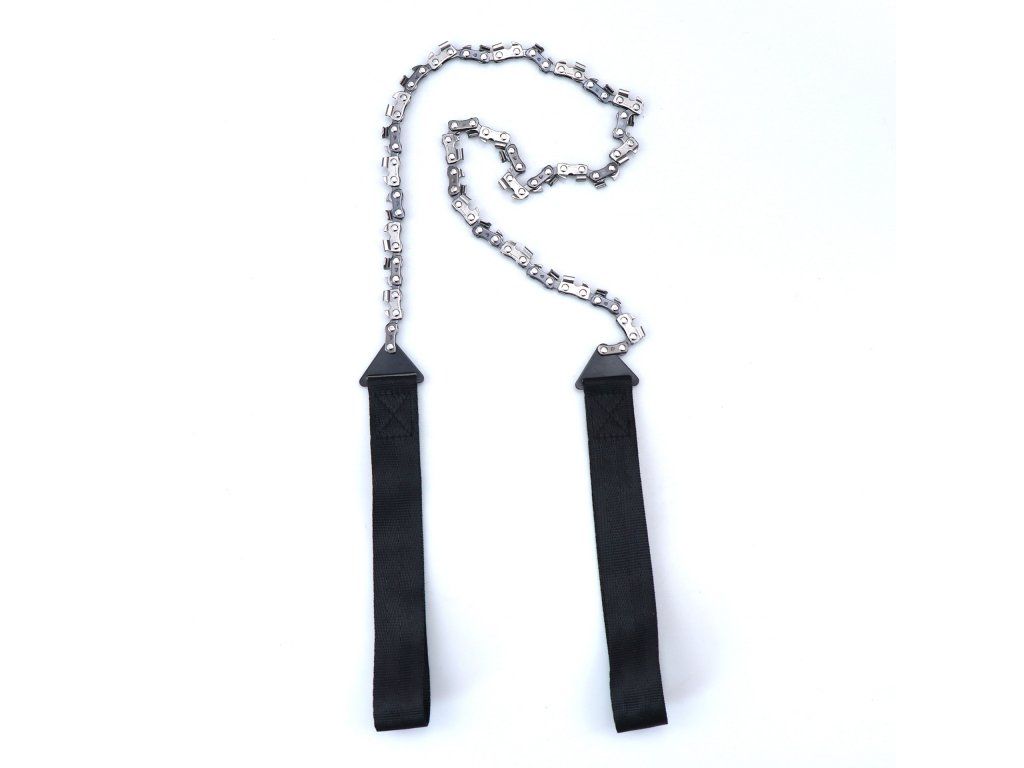
For preparing fuel for a fire, a pocket saw is handy - at a fraction of the weight of a hatchet, it can cut through branches and even thinner trunks. The chain version is faster and more precise than the wire version, fits in your pocket, and lasts through hundreds of uses.

Water: purity, not just availability
During physical activity the body uses 2 to 3 litres of water a day, more in the heat. Dehydration from losing just 2% of body weight (roughly 1.5 litres for a 75 kg adult) measurably reduces performance and muscle coordination - exactly the abilities you need most in a survival situation. At a 5% loss, headaches, dizziness, and muscle cramps set in.
Why you can't just drink from any stream
A clean-looking mountain stream may not be microbiologically safe. Giardia lamblia, the parasite that causes giardiasis, is a single-celled organism whose cysts survive for months in cold water. Infection causes severe diarrhoea and cramps typically 1 to 3 weeks after ingesting contaminated water - long after you've returned home, or in the worst case right out in the field. Boiling reliably sterilises water (1 minute of boiling at lower altitudes, 3 minutes above 2,000 m), but chemical disinfection with chlorine or iodine tablets doesn't always suffice at lower water temperatures.
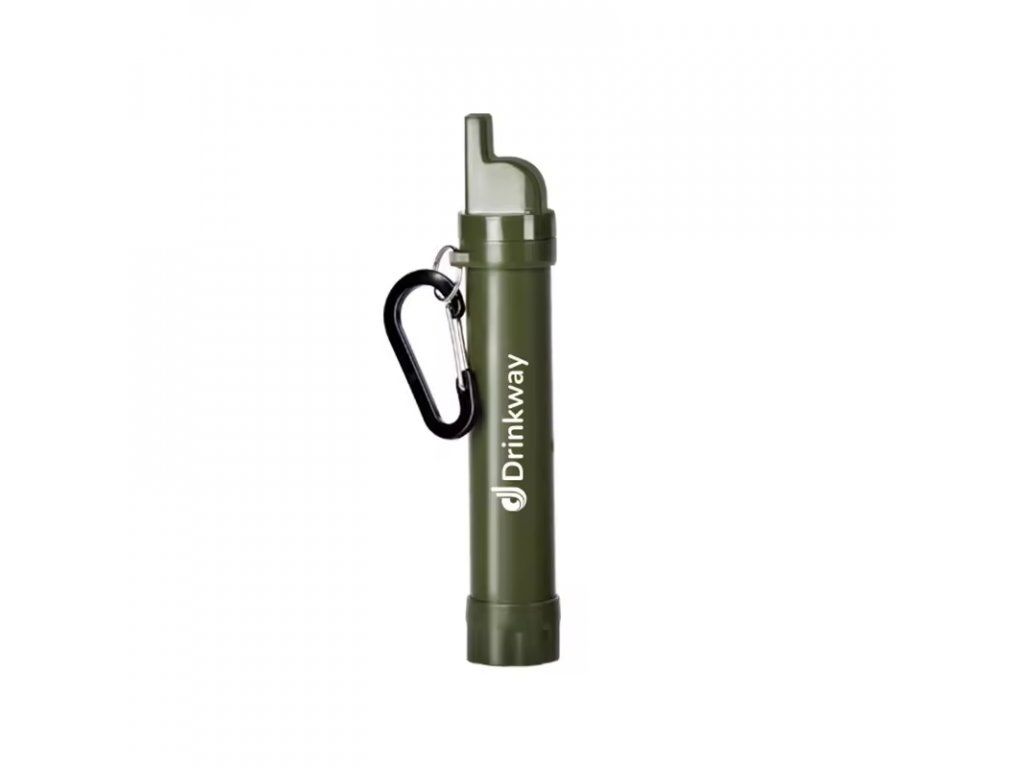
A compact hollow fibre filter filters out bacteria and protozoa and can purify hundreds to thousands of litres of water without needing spare parts. Very turbid water reduces filtering capacity. In that case, pre-filter the water through cloth or let solid particles settle first, then filter it. Keep your canteen or water bladder separate from filtered and unfiltered water to avoid cross-contamination.

Navigation: map and compass as a foundation with no battery
GPS navigation on your phone or a watch with built-in navigation is convenient, as long as it has power. A phone battery typically lasts 4 to 8 hours with active GPS navigation and a mobile signal. In terrain where the phone is searching for a weak signal, power consumption increases by 30 to 50%. So over 10 hours out in nature, you genuinely risk your phone's navigation dying at exactly the moment you need it.
A paper topographic map and a compass are a system that needs no power, doesn't run on batteries, and won't fail in the rain. Working with them requires a basic knowledge of triangulation and reading contour lines, which you can learn in a single afternoon with a map in hand. A compass needs a straight, transparent baseplate for taking a bearing, a transparent rotating bezel to compensate for declination, and a long enough edge to line up against a map.
Before heading out into the field, always download offline maps of the area to your phone (the Mapy.cz, OsmAnd, or Gaia GPS apps let you save maps without a connection), and physically bring a printed copy or a purchased hiking map too. An offline map on your phone, a paper backup, and a compass together form a navigation system resistant to both power failure and loss of a device.

Knife: the most important tool in the field
A quality fixed-blade knife is a tool for almost everything in a survival situation: preparing tinder and splitting wood for a fire, building improvised shelter, preparing food, cutting paracord, first aid, and defence. That's exactly why it needs to be reliable.
There's a crucial difference between a fixed-blade knife (so-called full tang, where the blade runs through the entire handle) and a folding knife or a multitool. A full tang knife can handle significantly more lateral stress when splitting wood or prying. A multitool is an extremely useful addition for screwdrivers, a file, and pliers, but it isn't enough as your primary cutting tool in a survival situation.
A blade length of 10 to 12 cm is the optimal compromise for survival use: big enough for working with wood, small enough for precise work with tinder and food. Choose a blade material made of stainless steel with higher corrosion resistance if you don't maintain your gear much. Always carry a pocket sharpener, since a dull knife in the field is not just inefficient but dangerous, forcing you to use more force and lose control.
Signalling and rescue: calling for help is a survival skill
One of the most important principles of survival is knowing when to stop fighting alone and call for rescuers. Rescue operations in the Czech Republic are free unless it involves deliberate misuse of the emergency line. So don't hesitate to call the emergency line 112, 150 (fire and rescue), or 155 (emergency medical service), or the direct line of the Mountain Rescue Service if there's a real threat to health or life.
Signalling devices
A whistle is the cheapest and lightest signalling device, and it's always worth carrying. A human voice can be heard in the field at 100 to 200 metres. The sharp sound of a good whistle (without a pea, which jams when it gets wet) carries beyond 500 metres, and even further under the right conditions. The internationally recognised distress signal is six blasts per minute, a pause, then six blasts again.
A satellite communicator or PLB (personal locator beacon) is the solution for remote terrain with no mobile signal. Once activated, a PLB transmits a distress signal on the 406 MHz frequency, picked up by the global COSPAS-SARSAT rescue system. A PLB's battery lasts up to 6 years in standby mode without replacement, and at least 24 hours of transmission once activated.
First aid kit: what actually saves lives
In survival, 80% of fatal situations in the wild don't arise from hunger or thirst. They arise from wounds and infections, dehydration caused by diarrhoea or vomiting, hypothermia, and traumatic injuries, which most often happen from a fall or an accident. That's why a first aid kit isn't an optional extra, but insurance whose contents you need to know by heart.
The absolute basics are a tourniquet to stop massive limb bleeding (a commercial CAT or SOFTT-W tourniquet, not an improvised scarf), sterile wound dressings, disinfectant, an elastic bandage, an antihistamine, and basic pain relievers.
Add tick tweezers to that. In the Czech Republic, the risk of transmitting tick-borne encephalitis and Lyme disease is real across most forested areas from May to October.
An important note on infection prevention: even a small scrape or superficial wound in the field can quickly become infected with soil bacteria. Disinfect every wound immediately after treatment, no matter how minor it looks. An infection that would be resolved with antibiotics in a hospital within 2 days can, in the field without treatment, turn into sepsis within 3 to 5 days.
Clothing in the field: cotton kills
One of the least discussed aspects of survival gear is clothing. Cotton is the worst material for surviving in cold or wet conditions. It absorbs moisture (sweat, rain) and holds it against the skin, and wet cotton draws heat away from the body up to 25× faster than dry material. A cotton T-shirt, jeans, or vest (standard summer clothing) are a direct path to hypothermia if the weather suddenly changes.
A layered system made of synthetics or merino wool, on the other hand, wicks moisture away from the body. A first layer of functional material stays relatively dry even during intense activity. A mid layer of fleece or a light down jacket keeps a layer of warm air in place. An outer layer of waterproof material, i.e. a raincoat or poncho, weighs less than half a kilo in your backpack and can decide the outcome of an entire night.
A wind speed of 40 km/h at an air temperature of 10 °C feels like around -1 °C. Combined with wet clothing, that figure drops even further. That's precisely why layering in the field is a necessity, not a fashion choice.
The psychology of survival: what fails first
The most reliable outdoor gear in the world won't help you if you fail mentally before the situation is resolved. Research on military survival training consistently shows that the primary factor in survival isn't physical condition or technical knowledge, but the ability to stay functional under stress.
The key mental tool is the STOP protocol: Stop, Think, Observe your surroundings and available resources, and make a Plan and carry it out. This process prevents the most common mistake, immediate action without thinking, which burns energy, causes disorientation, and makes the situation worse. Panic burns through muscle glycogen in 20 to 30 minutes, while replenishing it without food takes hours.
The second key psychological mistake is ego: refusing to admit that the situation is serious, that you've gotten lost, or that you overestimated your abilities. Turning back before reaching your goal, calling rescuers, or asking passers-by for help - these aren't signs of weakness, but the right decisions. In the vast majority of fatal accidents in the field, there was a moment when the victim could have escalated the situation, but didn't.
What beginners underestimate most often
Preparation happens at home, not in the field. The most common mistake is buying gear without testing it beforehand. Matches that get wet in the first rain, a filter that never passed a test, a bivy bag that takes 5 minutes to unpack in the dark at a bivouac - these are all things only practice reveals.
The second mistake is overestimating technology. GPS, a satellite phone, and a power bank are great tools, but each one depends on power and can fail. A paper map and compass can't. Matches can fail; ferrocerium doesn't.
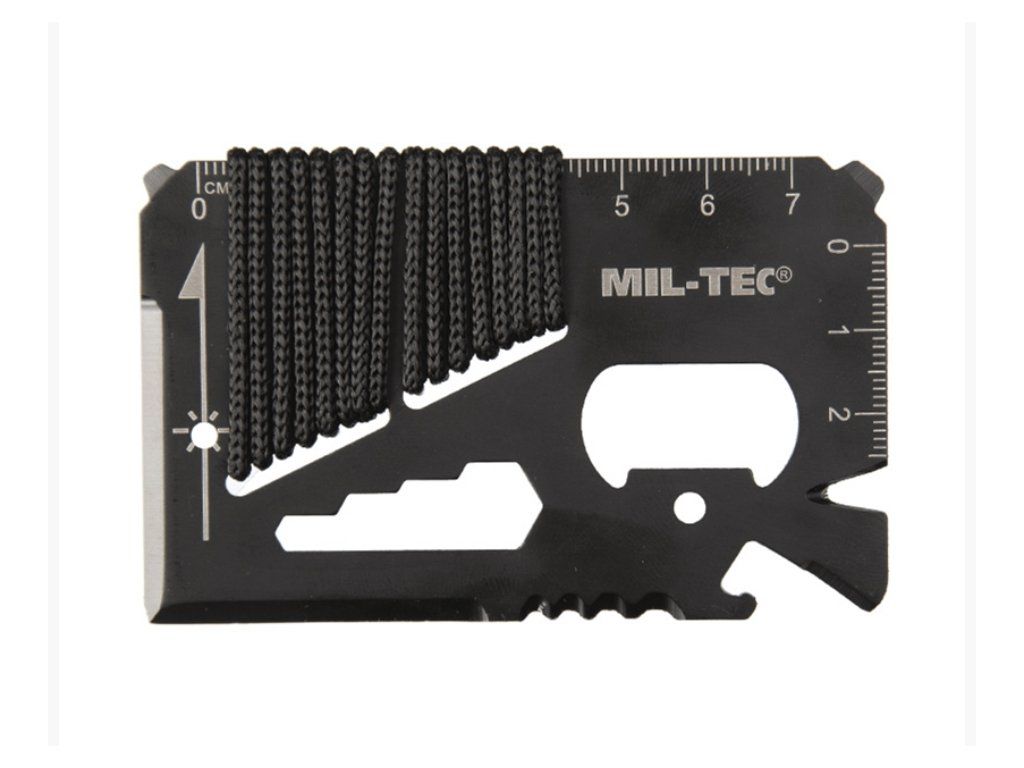
The third mistake is underestimating the weather. A weather forecast in the Czech Republic is accurate for 12 to 24 hours, with declining reliability after that. Always pack your gear assuming it could be 10 °C colder and rainy. Then a survival card always belongs in your pocket - it weighs 34 grams, fits in a wallet, and in an emergency serves as backup for your tools.
Summary: gear you can actually rely on
Basic survival gear consists of an emergency thermal blanket or bivy bag to preserve body heat, ferrocerium with prepared tinder to start a fire in any conditions, a compact water filter to protect against the microbiological risks of natural water sources, a full-tang fixed-blade knife as your basic tool, a map and compass as battery-free navigation backup, paracord for building shelter and dozens of other situations, a first aid kit with a tourniquet as backup for traumatic injury, and signalling devices; a whistle is enough as a minimum, and for remote terrain a PLB or satellite communicator.
This entire kit fits into a 3 to 5 litre pouch and weighs under 2 kilograms. It isn't gear for comfortable camping, but gear for the moment when the comfortable plan falls apart. And that's exactly the moment when every gram and every reliable function matters.
Test your gear before you head out. Light a fire using ferrocerium. Filter a litre of water and taste the result. Unpack your bivy bag and lie in it for 10 minutes. Only then do you know what you have.